From Chalkboards to Smartboards: Evolving Teaching Practices for Student Development
Do you ever think of a classroom without technology today? Teachers could only use chalkboards and textbooks a few years ago. And now we are witnessing smartboards, tablets, and digital classrooms defining the way students learn in day-to-day life. Teaching methods have evolved rapidly, fundamentally impacting the way students think, comprehend, and develop. At the heart of this evolution is the need to prepare students for a complex, technology-driven world. This blog explores how the stages of educational evolution shape student development, emphasising why adapting to these changes is essential for preparing students for the future. Stay with us till the end to discover why the right teaching approach can transform learning. The Shift from Traditional to Modern Classrooms Teaching has been largely one-way: teachers speak, and students listen. All of the lessons were centred on chalkboards and printed books. These methods introduced discipline and organisation, which were more likely to negatively affect creativity and teamwork. With the introduction of projectors, computers, and smartboards, this dynamic changed dramatically. Active participation occurred as learning shifted from passive listening. Students started engaging with graphics, videos, and even simulations instead of memorising facts. For example: A science lesson on the solar system is no longer confined to the pages of a textbook-students can now take virtual tours of planets and learn more, and show even higher interest. This shift is also beneficial to the teachers. Technology will help them individualise lessons, monitor performance in real time, and introduce the global outlook into the classroom. This shift in the use of traditional chalkboards to digital smartboards has resulted in more interesting, relevant, and accessible learning. Above all, it helps the students to acquire skills that cannot be adequately identified as a form of academic critical thinking, collaboration, and creativity. Teaching Practices that Support Student Development Teaching is evolving not only in terms of new tools but also in terms of new ways to learn. The modern-day school has come to realise that not all students learn the same way and teaching should accommodate those requirements. Student-centred learning is one of the changes that is important. Rather than being passive listeners, students are supposed to ask questions, share their ideas, and even be in charge of group projects. Not only does this eliminate lack of confidence, but it also turns them into responsible team players. Experiential learning is another practice. It can be laboratory work on one of the science lines, a role-playing game during a language course, or a creative art project: anything, though real-life activities enable students to apply the knowledge. It has been found that students learn and retain more when they can do instead of only listening. Personalised learning is also made possible by technology. Learning applications and adaptive testing tools determine the strengths and weaknesses of a child to enable a teacher to give the appropriate support. This implies to the parents that their child is no longer left behind in a one-size-fits-all system, but rather receives the attention he or she is supposed to receive. This shall be achieved in the contemporary classes by ensuring that student development is not only grade-centred, but also confidence, curiosity, and lifelong learning centered. The Future of Learning: Blending Tradition with Innovation Although technology is defining the future of education, traditional ways are also valuable. Physical books, in-person discussions, and handwriting of notes are part of the process to develop focus, memory, and interpersonal skills. The foremost issue facing schools today is how to reconcile the traditional with the innovative. The future is integrated learning – technology and traditional models living together. Suppose a student is working on math problems on a tablet, but is also working on paper to train their logical thinking. Or a tenth-grade history lesson that, in addition to reading a book aloud, has the children reading interactive timelines on a smartboard. This mix provides students with two worlds. They acquire the rigour and richness of conventional learning and are simultaneously exposed to the innovativeness, acceleration, and nimbleness of new technologies. In addition, this would equip the students with skills that will help them in the real world, where flexibility is among the most desirable. This is also continuous learning for teachers. They are now requiring training and professional development programmes so that they can use these new tools. And to parents, it is to understand that it is to seek the right balance in raising a child. Conclusion Education has shifted from chalkboards to smartboards, but the objective has stayed the same: growing students into confident and capable people. By embracing teaching methods that blend tradition with innovation, parents and teachers directly influence students’ ability to become curious learners, future leaders, and effective problem-solvers. The way we teach today will define the world our children create tomorrow. Related Blogs:
The Role of Parent-Teacher Relationships in Preschool Education

The role of parent-teacher relationships in preschool education is critical to a child’s success. Preschool is a time when young children develop their social, emotional, and academic skills. Effective communication and collaboration between parents and teachers can significantly enhance a child’s learning experience and support their overall development. Overall, the role of parent-teacher relationships in preschool education cannot be overstated. By fostering open communication, collaboration, and a sense of community, parents and teachers can work together to create a supportive and enriching learning environment for young children. When parents and teachers are partners in a child’s education, the potential for success is limitless.
Exploring the Benefits of Nursery Schools for Early Childhood Education
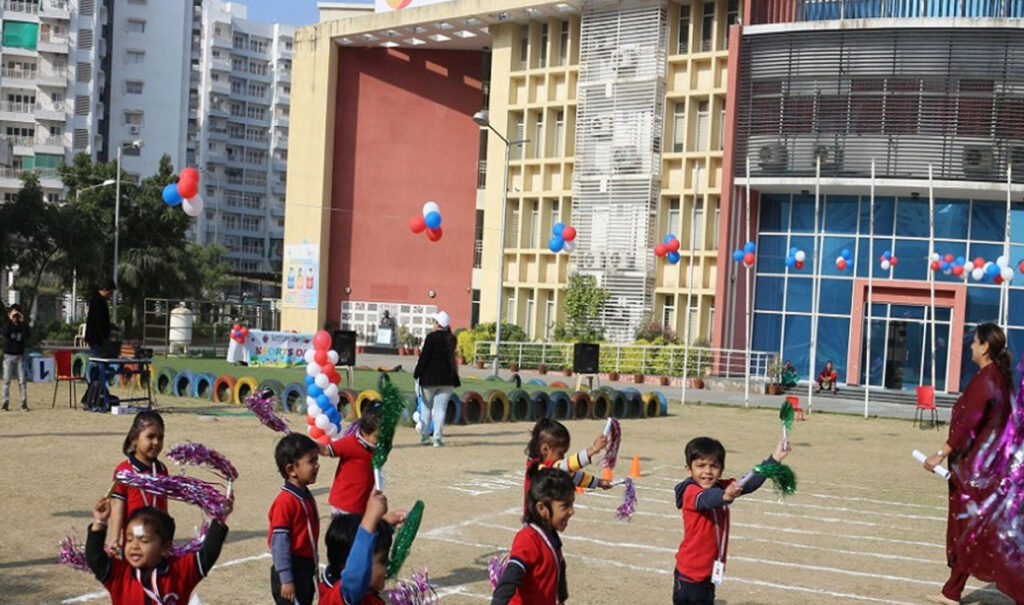
Nursery schools play a crucial role in a child’s early development. With their nurturing environment and focus on early education, nursery schools provide numerous benefits that positively impact a child’s social, emotional, and cognitive development. Benifits of Earlychild Education Social Development: Nursery schools offer children the opportunity to interact and socialize with their peers in a structured setting. Through group activities, collaborative play, and sharing, children learn important social skills such as cooperation, empathy, and communication. These early interactions help them develop friendships, build self-confidence, and establish a sense of belonging. Nursery school play a vital role in a child’s early development, providing a nurturing and stimulating environment for social, emotional, and cognitive growth. By fostering social skills, emotional intelligence, cognitive abilities, and independence, nursery schools lay a strong foundation for a child’s future academic and personal success.
10 Most Popular Franchise Businesses in India for 2023

Being one of the largest consumer markets in the world, and having a growing consumer spending India offers a huge potential market for both international brands and in-house franchises. What are the most popular franchises in India for 2022? The list of most popular opportunities of franchising in India includes education, fast food restaurant, health care, jewelry, coffee, techno services, fabric manufacturing franchises. Every entrepreneur looking for a trendy franchise to invest in may find something which suits them best in various sectors. We would recommend considering franchise brands with a good reputation on the market which offer complete assistance for their franchisees. CAMBRIDGE MONTESSORI PRESCHOOL AND DAYCARE Founded in: 2016Franchising since: 2016Franchise units: 200-500Initial investment: From Rs 10 -12 LakhsFranchise Fees: Rs 3.5 Lakhs Cambridge Montessori Pre School and Day Care is poised to bring excellence in early life education. As per Cambridge Montessori Preschool and Daycare (CMPS) independent learning, creative learning, and excellent communication skills are the basic needs for students to survive and grow in this competitive world. CMPS aims to provide value-based education of International standards by using best practices. Their approach is to make pupils confident, independent and make their life successful.